Over recent years it has become clear that many wild-living bee colonies, as well as a subset of managed colonies, have developed strategies to overcome infestation by the mite Varroa destructor.
As part of the ongoing policy to promote the use of healthy, locally adapted bees in the Sheffield area, a subgroup of SBKA beekeepers has been working to identify and breed from colonies of bees which display signs of varroa resistance.
Inspired by pioneering work undertaken by beekeepers at the Westerham Beekeepers association, we started a project in the 2024 season to monitor the level of mite infestation in our hives and use this information to identify queens heading colonies with consistently low levels of varroa.
See schematic below:
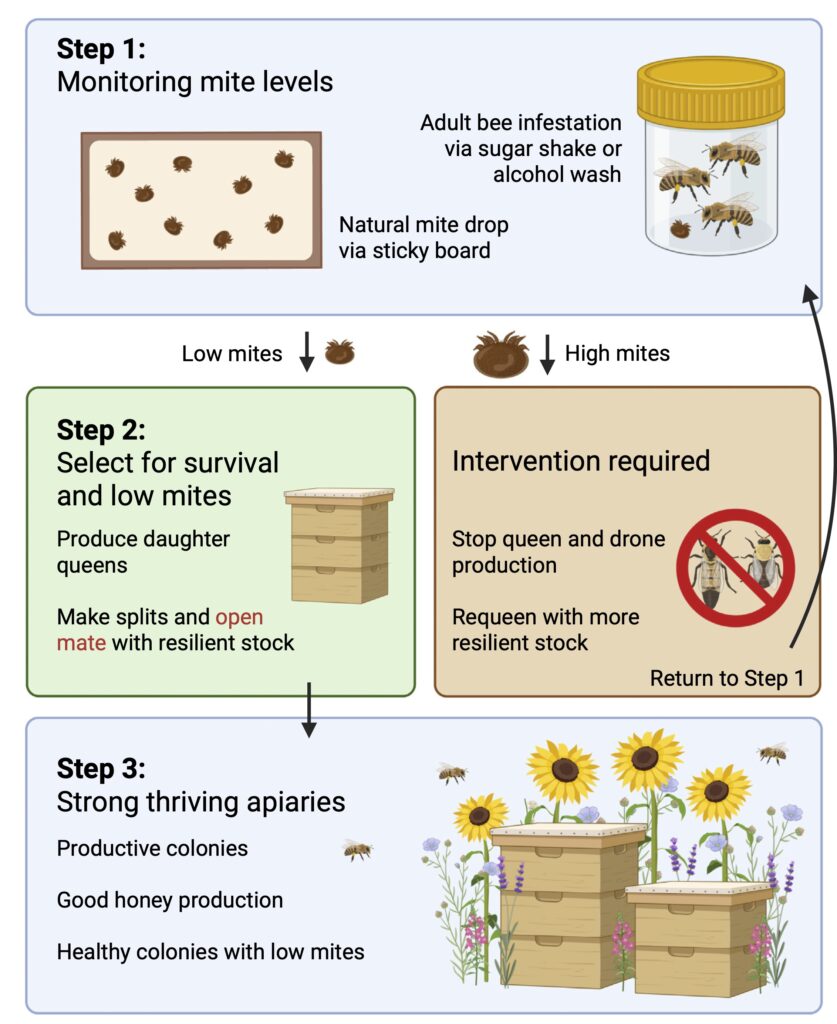
- Figure from Neumann et al 2026
Simple in concept, regular weekly monitoring of the total mite fall onto varroa boards from multiple colonies is a powerful approach and has revealed substantial differences in the levels of infestation across maintained hives. Plotted as cumulative numbers of mites dropped, clear differences between varroa resistant and varroa sensitive colonies can be seen.
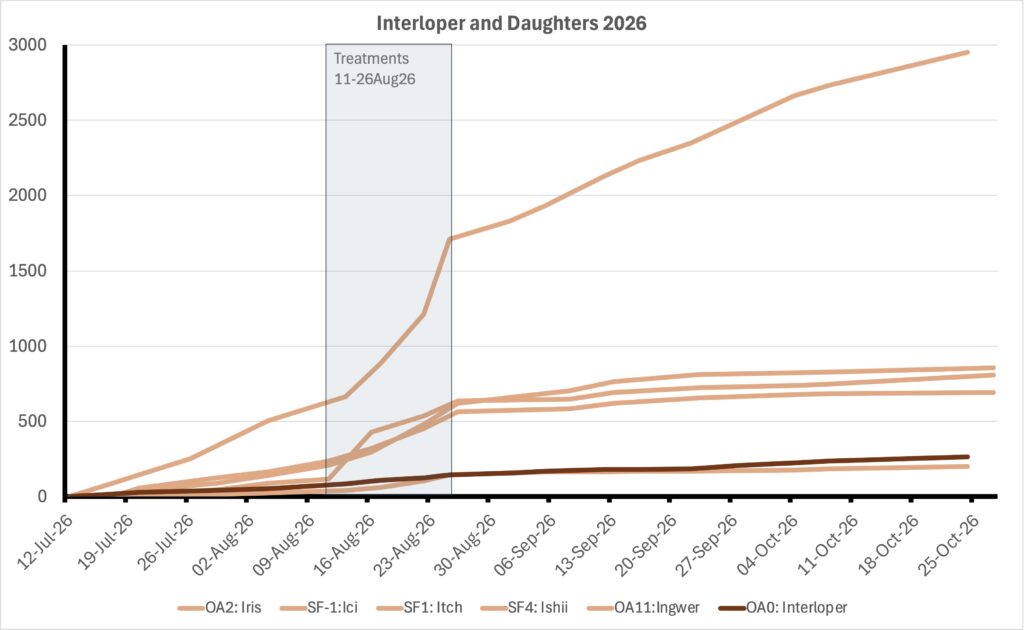
In the graph above, we have plotted the total number of mites that have fallen out of 6 related colonies over more than 3 months. Of particular interest, the 5 colonies shown in orange are all headed by open mated 2026 queens that are the daughters of Queen Interloper (dark brown line). Interloper is a 2025 queen that has previously also shown very low levels of mite drop. Of her daughters 4 (of 5) show encouraging signs of varroa resistance. With the best, Queen Iris, having a daily drop of less than 1 mite per day – averaged continuously between the 1-Sep and 16-Nov 2026. Taken at face value, these data suggest that a large proportion of open mated daughters of varroa resistant queens appear to retain the mite resistance properties of their mother.
Within the SBKA varroa resistance group we have now identified 4-5 distinct genetic lineages of Queens showing similarly low levels of varroa. The queens heading these resistant colonies are used as the breeding stock for our queen rearing efforts.
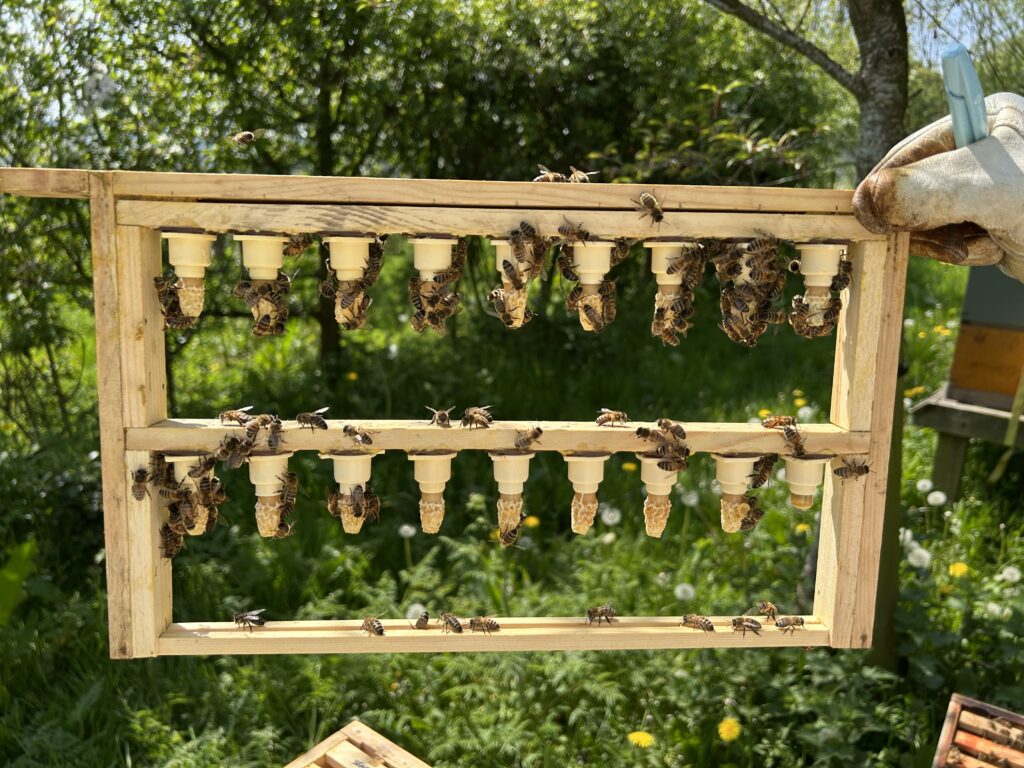
It is the wild mated daughters of our varroa resistant queens that we sell in the SBKA Shop. Although we cannot guarantee the varroa resistance status of any individual daughter queen, ALL nucleus colonies and mated queens sold by SBKA are locally bred daughters of the queens that head our lowest mite colonies.
We strongly recommend all beginners taking the SBKA Beginners course as well as the wider SBKA community to use these locally adapted and potentially varroa resistant queens as the foundation of their apiaries so as to spread VR genetics more widely within the area. Please noted however that beekeepers will still need to monitor varroa levels in these hives and be prepared to treat as necessary.